
Humansdorp District Eastern Cape
TALES ON THE KROMME
RETURN TO MEMBERS PAGE
Martha's Kromme Memoirs
Martheanne Finnemore (nee Mangold)
Part 1: Early days at Auntie Marge's
My very earliest memories of Kromme are the holidays in the 1950's and 1960's that our family spent at Auntie Marge Philip’s house situated on the Geelhout river. Auntie Marge was my father's sister, who married Robert Philip, a descendant on the renowned Reverend Doctor John Philip who came from Scotland to South Africa in 1819 with the London Missionary Society.
The Philip's house is situated on the Geelhout, a tributary of the Kromme. But from the property one can see right down to the small island where the Geelhout meets the Kromme on its journey to the sea. In fact from the longdrop lime-smelling toilet which used to be situated some way from the house in a small wooden hut, if you sat with the door open, there was a panoramic view of this scene. This beguiled many a sitter to tarry there longer than necessary. In addition, there was a pile of old English magazines with numerous cartoons next to the toilet seat and they could entertain one for a long time. It is by far the best toilet that I ever have had the privilege to be seated upon even though you had to keep a watchful eye on the spiders that lurked in its corners. Because of the practice of sitting staring down the river with the door open, anyone approaching the toilet needed to whistle to warn the incumbent that someone was coming.
In 1948, the Philip family had bought their magnificent property from Fred Morrison, the original landowner of all the property in the area. They called the property Ripon after a town in the UK where friends of Robert and Marge and lived and where Rod and Wendy had stayed one year while their parents went on holiday in the UK. This name however remained only to grace a small sign at the entrance to the property. To us the name of the river, Kromme, was the only name that we used when talking about the place as a destination. In 1949, Robert had erected a sturdy wooden house on strong poles made with the timber from packing cases from General Motors. The wood was creosoted giving it a distinctive look and smell. This structure looks as robust today as when it was erected although the house has been vastly modified and expanded upon since then. Under the house were ant lions who made their conical traps in the sand and we used to delight in catching ants and putting them into the holes and seeing them snatched from below.
Tragically Uncle Robert died of a heart attack at a young age in 1951 leaving Marge a widow with two small children, my cousins, Rodney and Wendy. Although Marge was a strong, feisty woman of note, my father, James, an engineer and very practical, stepped in to help his sister over the years in looking after Kromme. I am sure that this was how we came to enjoy so many holidays there. Our holiday time at the house was usually during the winter school holiday although I do remember swimming in the river, which indicates that we also sometimes went in summer. Uncle Bob, who was James and Marge’s younger brother, was the prankster in the family. He and Auntie Is, together with their twins, Peter and John, came in the summer holiday to join Auntie Marge and her family. The Mangold family was close knit and supported one another in many endeavours, both family and business.
Preparing to go to Kromme was a major undertaking. Our car, one of the old fifties cars with a huge boot and wings at the back, was always packed to the hilt. My father was highly skilled at using every nook and cranny of the boot to pack in. It was a drive of approximately 15 kilometres from Humansdorp via the untarred Oyster Bay Road and then over the stony farm road hoping we did not get caught in the dust behind any other cars. No air conditioning then. Peter Mangold told us that after their long drive from Bloemfontein, as soon as they hit the dirt road, they would open up a beer so as to mark the start of the holiday. My brothers, Chris (later known as Flossy) and Michael, would vie to be the first one to see the river as we came down the hill to the Philip's house. We passed by the row of gum trees planted at the time when it was the rage to have these easy growing Australian aliens. Little did we know that half a century later we would wage war on their offspring that were rampantly taking over the fynbos.
We always entered the house via a small back stoep. The paraffin lamps were kept there. There was no electricity at the time. Ritually each night the Coleman lamps would be patiently pumped and finally lit on the patio by Lukas Plaatjies, surely a descendant of the plucky Khoisan people who had inhabited the area long before any Europeans arrived on the scene. One of the Coleman lamps would be strategically placed over the dining table and numerous unfortunate insects would get themselves burned and you had to be careful to see they did not fall into your plate. In those days the number of insects was far greater than today and flying ants were sometimes like mini battering rams at the windows trying to get to the light. We also learned to live with the fact that numerous large spiders would also be joining us for the holiday.
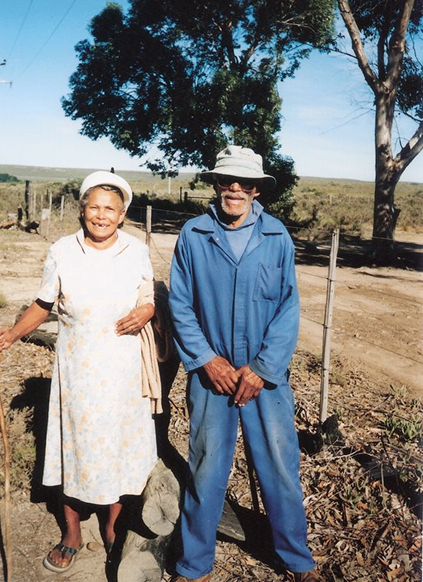 Lukas did not have to listen to a weather forecast on the radio to know what was going to happen. Through his own observations he could read all sorts of signs in the heavens. Rod told me that he even used the movement of ants and behaviour of seagulls to formulate his own weather forecast. He used to talk about the moon tipping water by looking at its shape. He lived on the property for many years with Rebecca, his wife, and their 11 children. There had been thirteen, but two had passed away at a young age. The children included Hendrik (who later worked at our own Kromme house and married Sophy), Minnie, Lukie (who was Uncle Bob's right hand man for many years in Bloemfontein and then worked in the traffic department at Humansdorp), Abraham who became a cabinet maker and did some tiling for us, Izak who worked at ACEM and married Sandra (who later looked after John-John while Robb and Cath were at St. Francis and what a star she was), Booi, Clara and Deborah (who married Manie, who later became our right-hand man). Quite amazing when you write it all down to see how the descendants of Lukas became somewhat entwined with the Mangold family. Rebecca spent a lot of time fishing in the river with a handline to catch enough fish to feed her brood but her son Lukie did tell me once that they sometimes had to have hot water at night to fill their grumbling stomachs. Rebecca was, needless to, say adept at skilfully filleting any fish so that no bone every found its way into your mouth.
Many moons later, I snapped Lukas and Rebecca on the road to the house when they were already in retirement but staying in a cottage on the property.
From the back stoep one went into the small kitchen via a fly screen door which banged hard behind you. Rebecca would be there wearing her white apron and blue slippers, the hallmark of domestic workers at that time. She would always have an effusive and warm welcome for everyone and would do a little jig. There was a primus with a kettle on it and a gas stove. It was on this stove that water would be heated in a paraffin tin for the weekly bath that we kids had there. There was no such thing as running hot water in the bathroom or even a toilet. When we got home from Kromme we were so dirty that my mom used to put a dollop of Surf washing powder into a bath and then turn the taps on full ball making a lovely bubble bath in which my brother, Chris, and I would soak away the mud from under our toenails. There was a simple wooden dresser in the kitchen which housed all the crockery. Most memorable among the crockery was the red, robust plastic bowls in which pudding, invariably tinned fruit of some sort, was served. Another vivid memory I have of the kitchen is when a very large crab was put into a pot of hot water that was not fully boiling. It managed to fling itself out the pot and made a hasty scuttle for the door - its claws scrabbling desperately on the slippery floor - only to find its escape route blocked and its fate sealed. I could not eat crab meat after that.
The kitchen led directly into the large living room. There were squares of cheery lino on the floor with geometric patterns in bright primary colours on a white background. There was a very long table that could seat at least sixteen people and strong wooden chairs that have survived heavy wear and tear until today. The table cloth was a permanent fixture – heavy duty plastic backed with a heat absorber - impregnable and everlasting. The small paraffin fridge stood in the living room and was forever on the blink and having to be attended to. In order to keep beer cool as well as other drinks, a sack was hung from a tree in which the bottles were stored and this was kept wet throughout the day to provide the cooling effect of evaporation. Milk was not kept in a fridge - we left home with a full crate of bottles of sterimilk which did not need refrigeration but to me always had a strange taste. Maybe the plastic cups had something to do with it. The lounge furniture comprised an old brownish comfy couch and chairs and a small carpet. There was a sideboard for drinks and glasses above which a beady four-eyed man stared at you with big buck teeth. These teeth served as a most effective bottle opener – fifty years later it is still there affixed to the wall in the same place. There was an old gramophone on which we used to play the old 78 record “You You You, I’m in love with you, you, you”…. with the trusty gold needle following the grooves of the record to the end. We later changed our sing along to Hugh, Hugh, Hugh after Wendy became enamored with Hugh Russell, her future husband. I also had a bit of a secret crush on him – he was tall, dark and handsome and nice on the inside as well. Later I was one of their bridesmaids. I was very plump at the time with lots of puppy fat – in stark contrast to Wendy and the other bridesmaids who were very thin. Auntie Marge insisted that I wear a corset so I was pummeled into a boned corset that went from under my boobs to the top of my legs leaving me virtually rigid and standing like a statue in the wedding photos. But I digress.
Three bedrooms opened up directly from the living room. In Auntie Marge’s room there was a Victorian washstand with a giant jug presumably for her daily ablutions and a pottie under the bed. My mom and dad sometimes slept in this room as Auntie Marge did not always accompany us on holiday. My brothers, Michael and Chris slept in the back room on the other side of the main room with any friends that came along and I was in the front room sometimes accompanied by a friend, Margie Porter or Anne Stuart. The latter still talks today about how my brothers put a lot of prawns into her bed as a prank one night and then could not remember how many they had put in. Consequently she could not go to sleep wondering if any were still lurking about. The bedrooms were very basically furnished with a shelf in the corner under which there was a rail for hanging up your clothes. As there was no inside toilet, my brothers used to delight in weeing out the windows when they woke up in the morning. Potties were not for them.
There is a front stoep on the house looking over the garden of indigenous trees and towards the river. Paradise fly catchers live there. On the opposite side of the river is a sheer krans which answers back if you talk to it. In those days numerous dassies lived there, sunning themselves on the rocks, until a caracal finished them all off. We used to love clapping our hands to make the dassies run about. There are stairs which lead down to the river and the boathouse and jetty. I remember one morning running down the stairs and finding a Puffadder at the bottom of the path. It is a picture forever in my mind, its beautiful geometric patterns highlighted in the sunshine. I only came across DH Lawrence's Poem “The Snake” years later and on reading it understood perfectly what he was saying: A snake came to my water trough. On a hot, hot day and I in my pyjamas for the heat, to drink there.
Another memory I have is going down to the river and finding for the first time in my life that the whole flat spur at the corner of the property that was normally covered with salt marsh plants was completely submerged under water. Michael had been down to the river before me. Being somewhat in awe of my elder brother, I was convinced he was playing a magical trick on my eyesight. I did not understand that a spring tide could be so full and cover the whole area.
So what did we do at Kromme in the early days?
The Kromme holiday was totally dedicated to fishing and the cycle of tides and bait digging that go with that activity. This was my father’s passion and all of us had rods and reels which he spent hours kitting out for us. I had a special green and white float which I would watch like a hawk and when it went under it was quite easy to haul in the fish. I was very attached to that float. It was mine. My father was extremely patient and before we could bait our own hooks would sometimes spend the whole time baiting and casting for other people. Every day we would all pile into the boat to go down and dig for prawns at the bait bank at the Drift, although I think my mother was spared this jaunt and probably enjoyed some time to herself. Bait digging was a very muddy pastime. But I still find the squelch of mud between ones toes a pleasurable, even sensual, experience. In those days prawns were plentiful and even pencil bait could be found quite easily. Hooking the latter with the long piece of wire was just as exciting as going to Playland to try and hook a fish to win a prize.
We dug for prawns with big spades with no concern for the damage caused to the prawn banks or the fact that we were interfering with an eco-system that was feeding numerous birds and fish. We came back with big wooden boxes of prawns which my father kept cool by placing wet old towels over the boxes. As the fish were always on the bite we needed large volumes of bait. Fish were also so plentiful that the thought that some fish species were actually under threat did not even enter our heads. Large steenbras, stompies, grunters and cob were common catches in those days. You just had to drop a line over the side of the boat and for sure a fish would take your bait within seconds. We ate fish every day. It is from my own experience that I can teach children about “Sustainable Fishing” at WESSA workshops having seen in my lifetime the diminution in the size and numbers of fish in the river and even the decline of species of fish such as the Steenbras, which is a very, very rare catch nowadays.
In the 1950's, visitors to the Kromme who had never fished before would be very surprised to catch their first fish within seconds of our stopping the boat. Plentiful also were the dreaded barbels which used to be dispatched in the most gruesome fashion either crushed in the jaws of a pliers type implement or banged on the side of the boat until they fell off!! No mercy shown. We used to fish off one particular spot off the island in all types of weather although my dad also liked to drift around occasionally to catch 'leerie' and big cob as well. No matter what the weather was like, we all went out. I had a fishing beanie which was red and green striped that I had knitted myself as my practical knitting assignment at Summerwood Primary – it lasted many years.
I have abiding memories of sitting on the river as evening fell with skeins of geese in long V formations flying over us homewards to who knows where. While today there are still geese to be seen, the numbers of birds in the skeins are nothing like they were in the old days. What has also disappeared are the swans that allegedly came up the Kromme after escaping from a shipwreck off St Francis. They looked very majestic swanning down the Kromme and became quite tame and we could feed them from the jetty with bread. There is only speculation as to what led to their departure to the Seekooi river and ultimate demise – inbreeding, a virus or just too much interference from human beings.
We loved fishing at night which we called Scooping and it would be a huge palaver to get the gas lights affixed to the front of the sturdy clinker boat before setting out on a moonless night to hunt for mullet behind the island. Michael or Chris used to stand on the front of the boat with the big net, dipping left and right frenetically into the water to catch the large mullets. The rest of us had small nets to scoop up those mullets that jumped like jet propelled missiles at the side of the boat. One night, when Margie Porter was with us, we went out on a moonless night and it literally rained fish that continuously thudded into the boat – a never to be forgotten experience. Needless to say Scooping is now banned. One thing Michael and I share in common and still talk about today is that on one scooping expedition we both saw a huge cob that passed under the boat – a massive specimen. I believe this could have been the monster Cob that was caught by a local fisherman, Coenraad, at the back of the island several years later (1973) a picture of which was traced on our boathouse wall. The inscription states that it weighed 124lbs and measured 6ft 4ins. These giants of the river are the stuff of legend and not found anymore. I read an article the other day that said it is us, the recreational anglers, that have led to the decline of the fish stocks in the estuaries as we keep removing the breeding stock and destroying the prawn banks and wetlands, the breeding and feeding ground of many fish.
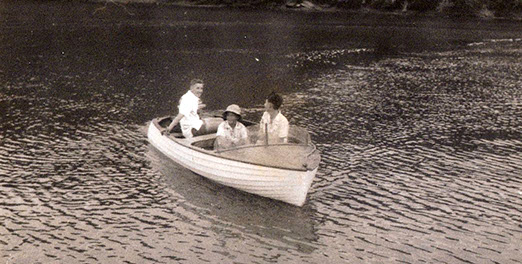 We also pottered around in boats, one with a small Seagull engine with a rope that you had to wind around to start the engine and we learnt to row and paddle a canoe at an early age. The canoe however was the wobbliest I have even been on and was likely to overturn at any small disturbance. In the early days, there was no such thing as driving to St Francis to the beach or taking the boat down the river for anything but bait digging. We stayed at the river and played around there quite happily. Swimming was also an experience as the mud was extremely thick and black. But we revelled in it.
As we grew into teenagers, our lives also took on a more social aspect and I was lucky that two of my school friends, Margaret Stanley (now Dersley) and Maureen Matthew (now Turner), also had houses on the Kromme. Margaret's father, Dick Stanley was the ultimate larger-than-life character and when they built their house also out of packing cases, he roped in Michael, Floss and their friends to help with the building. After working on the site, in the evening he would ply them with drinks to make sure they came back the next day. Something like the Western Cape dop system. He also taught them to play Lie dice, a favourite Kromme game for many years. Floss being only about 14 at the time remembers returning home in the boat from the Stanleys completely sloshed but having had a great time. The Stanley shack was full of character and had a dining nook whose wallpaper came from cut outs of fruit and vegetables from magazines which were stuck on the wall and then varnished over. A masterpiece. Their outside toilet was called the Thunder Box. The shack had a most sad end to its life after a fire started and the gas bottles exploded while no-one was there setting off an unstoppable conflagration. This happened in about 1990 when we were already in our own house on the Kromme. Robb recalls that he, Ryan and James went across the river to try and help extinguish the fire after someone had seen smoke billowing from the house. They were all going up the steep stairs when a gas bottle exploded. He said that he has never seen a hastier retreat back down the stairs than took place that day. When Margaret and Ted returned from town they found their house completely gutted. Robb reported that someone had remarked rather unfeelingly that it was a “spectacular” fire but that Ted took this stoically under the circumstances. Robb also remembers seeing some melted gold and remains of several jewellery pieces in the ashes. These apparently belonged to Margie's friend Sandy who for some reason or other was carrying all the family jewels with her and had left them in the shack while they went out for the morning.
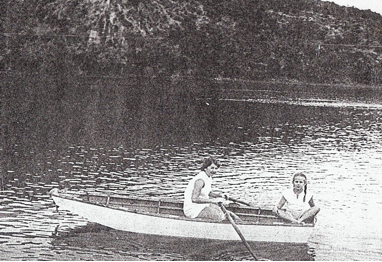 I sometimes also went with Maureen to stay with her at their house situated on the south bank of the Kromme above the island. We all lived and slept in the boathouse while they were building their main house. We were a large party including Maureen's granny who was wheelchair bound, her mom Marge, and dad John, plus her sister Rosemary and her then boyfriend, Ted Dersley, who later married Margaret. Sometimes Winifred, Maureen's eldest sister, also came. We all slept in the one big room. We were perfectly happy in the Matthews' boathouse and had a great time in spite of some serious snoring by Mr Matthew. Granny was the only one who had some privacy as she had a curtain around her bed because she used a commode. Granny Matthew was wheel chair bound. After her husband died she had become unable to walk. Every morning I used to get into the river with Marge Matthew to enjoy an early morning swim. One memorable visit I saw an owl while we were driving on the road to the river and said “Look there's an owl”. There was a deathly hush in the car. Maureen said “You should not have said that – it means we are going to break glass”. I thought “what hogwash” – coming from a totally un-superstitious family. By the end of the weekend, Ted had broken a big plate glass window which occurred when he threw open a door on hearing his reel spinning in the night after a fish had taken the live bait he had put out. Second to go was the jelly bowl and third was the windscreen of the boat – so okay it was not glass but heavy plastic. The last time I ever tried to ski was at their house. I received a serious enema from all the water rushing up my back passage as I was desperately hanging onto the rope trying to get up on the skis. That is the only negative thing that I can think of that ever happened to me at Kromme in the early years. They were halcyon days for us. Many years later Maureen and her husband Peter, together with Marge who has lived to a ripe age, spent a weekend with us at Kromme and we visited their old house which of course was now much larger than just a boathouse. Many memories of happy times came rushing back. The only problem with their house is that it is built too close to the river and inevitably with some of the floods that periodically come down the Kromme, the house is submerged under water. But there were sadder things that happened at the Kromme.
In the 1950's when Uncle Bob and Auntie Is were staying at Marge's house, Peter as a young boy contracted polio after he had been to a dentist and had had a tooth extracted. It was suggested that the virus had entered through this wound. He told me that he remembers being at Kromme on the river with Rod and Gavin Morrison and having the most frightful headache while seeing 13 swans, which he counted, go by. Prior to a vaccination being available, the virus had a devastating consequence on those whom it touched and he was subsequently left paralysed in his legs and needed to use crutches for the rest of his life. But he was game for anything. He was determined to marry a beautiful woman and he did - Judy - and went on to have two beautiful daughters, Lynn and Charlotte.
On two occasions that I can remember, the whole Mangold entourage including all the aunts and uncles and the kids went camping on the beach at St Francis near the mouth of the river long before St Francis became the upmarket resort it is today. The first occasion, it was New Year's Eve and I remember Peter flying his box kite on the beach directing all the others to run up and down to help get the kite airborne. None of us slept very much that night and we got back to the house the next day exhausted. We heard a car coming down the road and it was Pat Izod and his wife coming for the day. Everyone groaned. Michael says it was to Uncle Bob's credit that even though he was very hungover, he took the Izods out fishing while everyone else collapsed into bed. The New Year's Day fishing outing was a disaster from the beginning to the end as Pat somehow lost Bob's whole rod and reel overboard. On the second occasion we again went camping with the whole Mangold clan, it must have been in early 1968 as John and I were engaged. This could have been the last time we stayed in the Philip's house as my Dad and Uncle Bob were busy purchasing their own Kromme properties from Macdonald at the time. Once again the whole entourage set off for the beach. I had visions of a real romantic evening camping with the sound of the breakers at our feet. Uncle Bob set up everyone with big surf-size fishing rods and kept plying John and everyone with drinks as they sat along the shore fishing in the dark. Bob decided to cast John's line with its bait up the beach onto dry sand and his idea of a joke was to keep asking: “John have you had any bites yet???” John being the only really honest person I know thankfully kept saying “no” otherwise he would never had heard the end of it. Anyway by the time John came to sleep next to me – all of us in a makeshift communal tent – there was no romance but rather a beer and bait smelling partner. I could not even breathe in the same direction as him. In the morning, we were all resuscitated by eating a lovely cool watermelon which we still talk about as a life saver today.
To end off this part of the memoir it would be remiss not to describe Auntie Marge as I experienced her. Firstly she was Auntie Marge - not Marge to us and the word Auntie denoted a special relationship that we had with her. She was an imposing, big woman with a soft heart linked to a strong tongue. We were fond of one another and I am certainly pleased to have had her as one of my role models as to what woman were all about. She never flinched from saying what was on her mind. So between my gutsy mother and Auntie Marge showing me the Mangold way it is no wonder I landed up getting a comment on my report one year: “Martheanne is seldom outspoken - by anyone”. One could have said the same about Auntie Marge and my mother. Most notoriously Auntie Marge warned Stephanie when she got married to Michael that “You should never marry a Mangold!!!” This has left us for years speculating as to what she knew and was not telling.
When I was little she understood perfectly that what girls liked was dolls – especially me. She gave me many to add to my collection but also knitted the most dainty clothes and even minute booties only as big as the tip of your little finger. It was done with love and I really appreciated it and kept my dolls and clothes for years. She prepared for Christmas months in advance and delivered her presents about a week before Christmas to our house, the presents all beautifully wrapped and carefully chosen. She often hosted Christmas at her home in Upper Dickens Street for about thirty members of the Mangold family and would always have a traditional Christmas pudding filled with lots of 6d pieces. She came to our house every Sunday evening for supper and always brought her needle work. She headed up the Mayoress's work party that sewed for the indigent. My mother phoned Marge everyday – first thing in the morning - and for many years Floss went to have lunch with her during his break time at Grey. There are many stories about her but the one I like best was her joke about how she went skinny dipping up at the Kromme fresh water with two friends and proudly announcing that they only had four boobs between the three of them. This of course led you guessing as to who else had had a mastectomy. It was Karen Blixen who wrote that when you tell a story you must always leave some unanswered questions.
She did her children proud with Rod becoming a well known architect and Wendy a teacher – but the cherry on the top was that Marge, a royalist of note, shepherded Wendy overseas and had her formally presented to the Queen at Buckingham Palace as things were done for very posh girls in those days. There is also a story that during their stay in London she went down to breakfast in the dining room and in her excitement found when she sat down that she was wearing her suit jacket but had forgotten to put on her skirt and was only wearing her petticoat!! Marge in her own inimitable style reigned over the Kromme for many years. Peter Mangold does a wonderful take of her sitting at the head of the table at Kromme dishing out the pudding with a most imperious air. You didn't mess around at table or anywhere else for that matter with Auntie Marge. So it was that the twenty happy years we spent visiting Auntie Marge's house resulted in a deep love in all of us for the river and in fact in my case for all rivers everywhere.
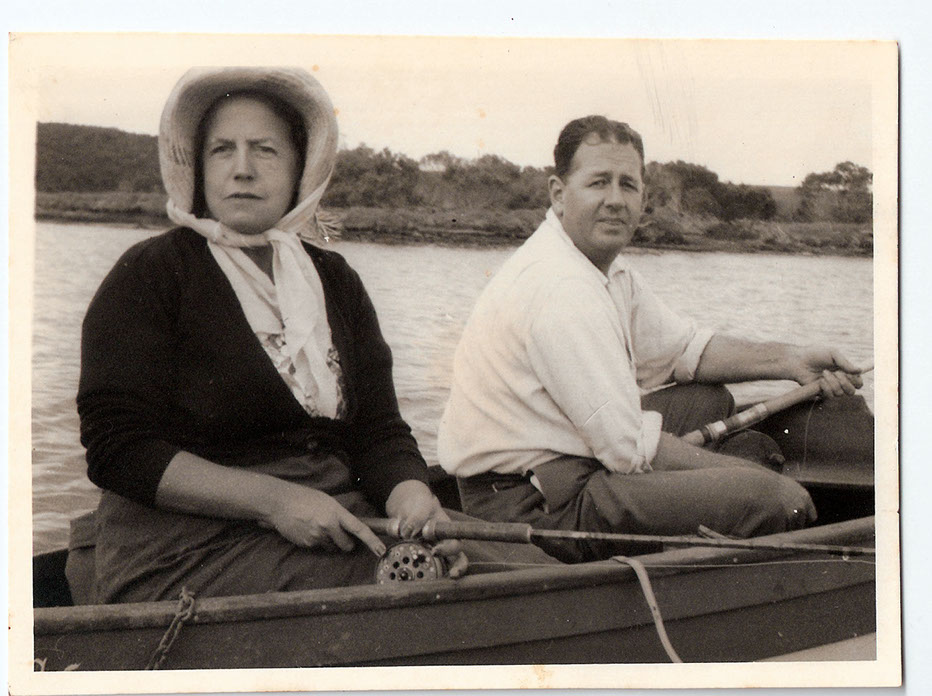
Auntie Marge and my dad at their favourite fishing spot off the island.